
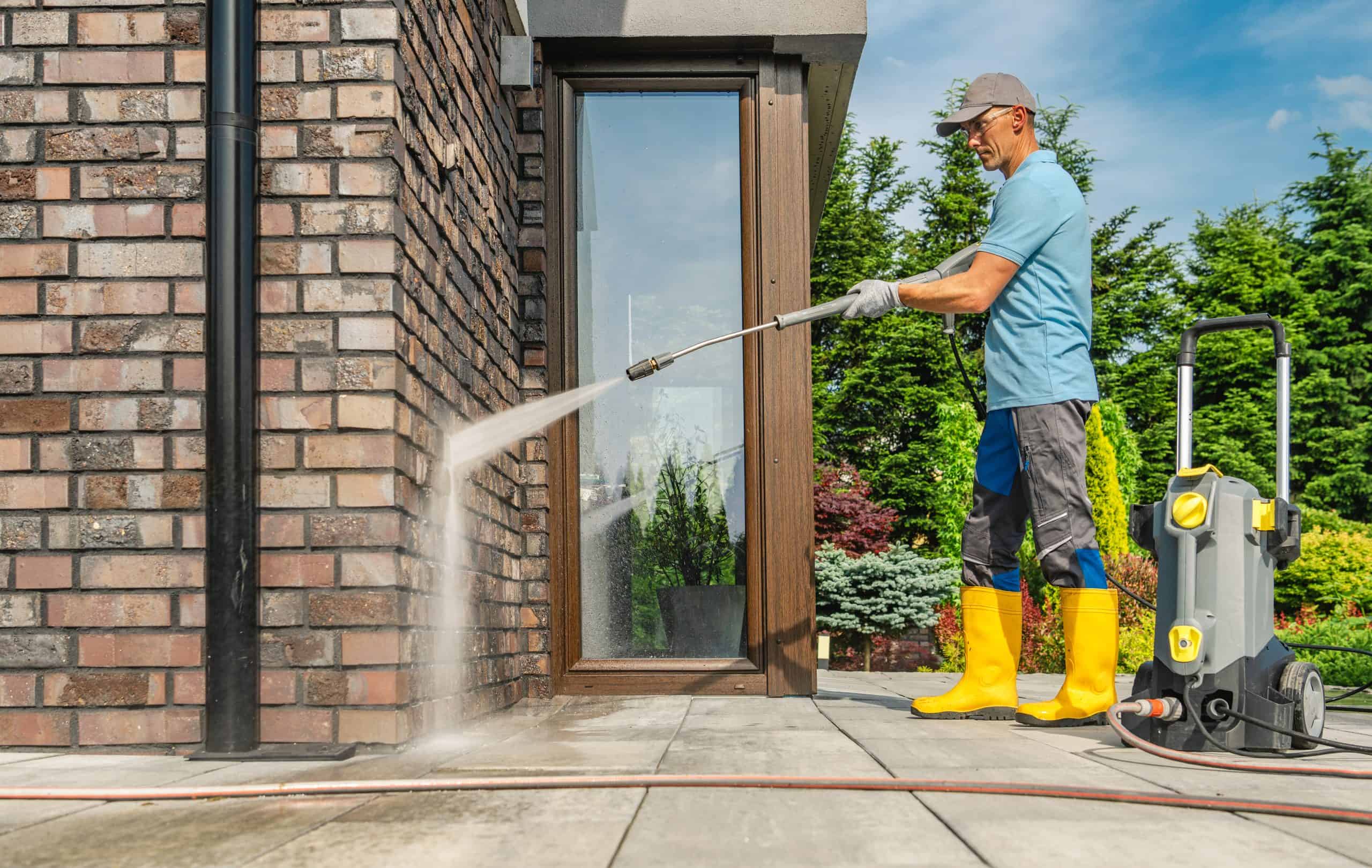
Most Florida homes should be pressure washed or soft washed about once a year, and every six to nine months if the house is shaded, close to water, or hit by sprinkler overspray. Roofs generally need attention less often than siding, and driveways, pavers, and pool cages each follow their own schedule. Visible growth should always override the calendar. Here is how to work out the right rhythm for your home.
Key takeaways
- Plan on one full exterior wash per year as a starting point for most Florida homes.
- Shade, trees, water, and sprinkler overspray can shorten that to six to nine months.
- Roofs usually need cleaning less often than siding, and they should only ever be soft washed.
- How you wash matters more than how often. Gentle soft washing protects siding and stucco, while high pressure can damage them.
- The best window in Central Florida is often right after the wet season ends.
How often should you pressure wash each part of your house?
Treat these as starting points rather than rules. Your own home, trees, and sprinklers will push the numbers up or down.
| Surface | Typical starting point | Clean sooner if |
|---|---|---|
| Siding, stucco, and trim | About once a year | The house is shaded, near water, or soaked by sprinklers, in which case six to nine months is common |
| Roof | Every few years, once streaks appear | Trees shade the roof or streaks spread quickly. Always soft wash. |
| Driveway and sidewalks | About once a year | Oil, rust, or heavy mildew shows up, or surfaces turn slippery |
| Pavers | Clean about once a year and reseal as the sealer wears | Algae returns quickly or joint sand washes out |
| Pool cage and deck | Once or twice a year | Pollen, algae, or tree debris build up fast |

Why Florida homes get dirty faster than homes in other states
Algae and mildew need moisture and warmth, and Florida supplies both for most of the year. The National Weather Service in Melbourne lists the median start of the wet season in Orlando as May 27, and the dry season as October 15. That leaves surfaces damp for months at a time. Add shade from oaks and palms, textured stucco that holds growth, and sprinklers that soak the same walls every day, and growth returns quickly after a cleaning.
Factors that shorten or stretch your cleaning schedule
- Shade and trees. Walls and roofs that rarely get direct sun stay damp longer and grow algae faster.
- Sprinkler overspray. Water hitting the same wall every day feeds growth, and in many areas it also leaves orange rust stains. Our guide to rust stains on Florida driveways covers that problem.
- Nearby water. Homes near ponds, lakes, and canals tend to deal with more humidity and growth.
- Surface type. Textured stucco and porous concrete hold onto growth more than smooth vinyl.
- Orientation. North and east sides get the least sun and usually show growth first.
- Color. White and light homes show algae and mildew quickly, while darker colors can hide it for longer.
- Landscaping. Shrubs and mulch pressed against the walls trap moisture and block airflow.
- Spring pollen. Oak and pine pollen coats surfaces every spring. It rinses off easily, but it can mix with moisture and give mildew more to grow on.
- Community standards. Many homeowners associations set exterior appearance expectations that can effectively set your schedule.
Signs your home needs washing now
Do not wait for the calendar if you notice any of these:
- Green film or fuzz along the base of walls and around corners
- Black spots or dark streaks on stucco or siding
- Gray or black stripes spreading across the roof
- Slick, slippery walkways, steps, or pool decks
- Dark mildew in the eaves, soffits, and around windows
- Orange rust stains near sprinkler heads
- A notice from your homeowners association
Our post on seven signs it is time to power wash your home’s exterior goes into more detail on what to look for.

Does washing too often damage your home?
The risk comes from the method, not the frequency. High-pressure washing can strip paint, gouge wood, etch concrete, and force water behind siding and into stucco cracks. Soft washing uses low pressure and a cleaning solution to loosen and remove growth, and it is generally the gentler choice for siding, stucco, and roofs. Hard, flat surfaces such as concrete driveways can handle more pressure. A gentle wash once a year is far kinder to your home than waiting until heavy growth demands aggressive treatment. See the science behind soft washing for how the process works, and pressure washing and power washing compared for the terminology.
The best time of year to wash a house in Central Florida
- Right after the wet season. Growth peaks after months of rain, and the dry season that follows gives surfaces time to dry. The median dry season start in Orlando is around October 15.
- Before the rains return. A late spring cleaning gives you a fresh start before the wet season begins.
- Before listing, painting, or hosting. A clean exterior photographs better, prepares surfaces for paint, and makes a stronger first impression.
- After a storm. Debris, leaves, and mildew can build up quickly once the weather clears.
Washing in the summer is possible, but afternoon thunderstorms can interrupt the schedule, and surfaces take longer to dry.
A simple yearly rhythm for a Florida home
- Late spring. Clean siding, stucco, and driveways before the wet season starts.
- Fall. After the rainy months, check for fresh growth, rust stains, and slippery areas, and clean what needs it.
- Every few years. Have the roof checked for algae and soft washed if it needs it.
- As needed. Check pavers with the water test and reseal when the sealer wears. Our guide to the best time to seal pavers in Central Florida explains the timing.
- Once or twice a year. Rinse or clean the pool cage and deck.
Should you do it yourself or hire a professional?
Small jobs, such as a patio or a short stretch of sidewalk, are reasonable for a careful homeowner with the right equipment. The risks grow quickly from there. Ladders, wet surfaces, electrical outlets, and chemical runoff all add danger, and too much pressure can cause damage that costs far more than a professional wash. Two-story homes and roofs are best left to trained crews. Our post on whether pressure washing is easier than landscaping looks at the effort involved.
What happens if you wait too long?
Light growth is far easier to remove than a thick, established layer. Waiting often means algae and mildew become deeply embedded in stucco and concrete, rust stains build up in layers, and roof streaks spread across more of the surface. Stubborn growth can call for stronger treatments and more labor, and surfaces left wet and slick for long stretches can become a slipping hazard. Regular cleaning keeps each visit simple and protects the finish on your home.
How often to wash in common Central Florida situations
- Shaded lot under mature oaks. Plan on every six to nine months, and keep an eye on the roof.
- Home on a pond, lake, or canal. Extra humidity usually means every six to nine months.
- Heavy sprinkler overspray on the walls. Fix the spray pattern if you can, and expect to clean more often until you do.
- Open lot with plenty of sun and dry walls. You may be able to stretch the schedule beyond a year, as long as no growth shows.
- Townhome or community with appearance standards. Follow the association’s guidelines and clean when growth becomes visible.
Frequently asked questions
How often should I pressure wash my house in Florida?
About once a year is a good starting point. Homes with heavy shade, nearby water, or sprinkler overspray often need cleaning every six to nine months.
How often should a roof be cleaned?
Roofs generally need cleaning much less often than siding, often every few years, depending on shade and moisture. Roofs should only be soft washed, never pressure washed.
Is once a year enough to satisfy my HOA?
It depends on your community’s standards. Many associations care about visible growth, stains, and roof discoloration, so check your governing documents and clean when growth shows.
How often should I wash my driveway?
Once a year is typical, with extra attention to oil, rust, and slippery mildew.
Is soft washing or pressure washing better for siding?
Soft washing is generally the better choice for siding and stucco because it cleans without the force that can damage them. Pressure is better reserved for hard, flat surfaces such as concrete.
Do you wash homes in my area?
Yes. We serve homeowners across Central Florida, including Orlando, Kissimmee, Ocoee, Winter Garden, Windermere, and Clermont.
Set up a cleaning schedule that fits your home
Top Dawg Power Washing is locally owned and operated in Windermere, Florida. We can look at your home, your shade and sprinkler situation, and your surfaces, and recommend a schedule that makes sense. See our residential power washing services, call 407-697-8603, or request a free estimate.