
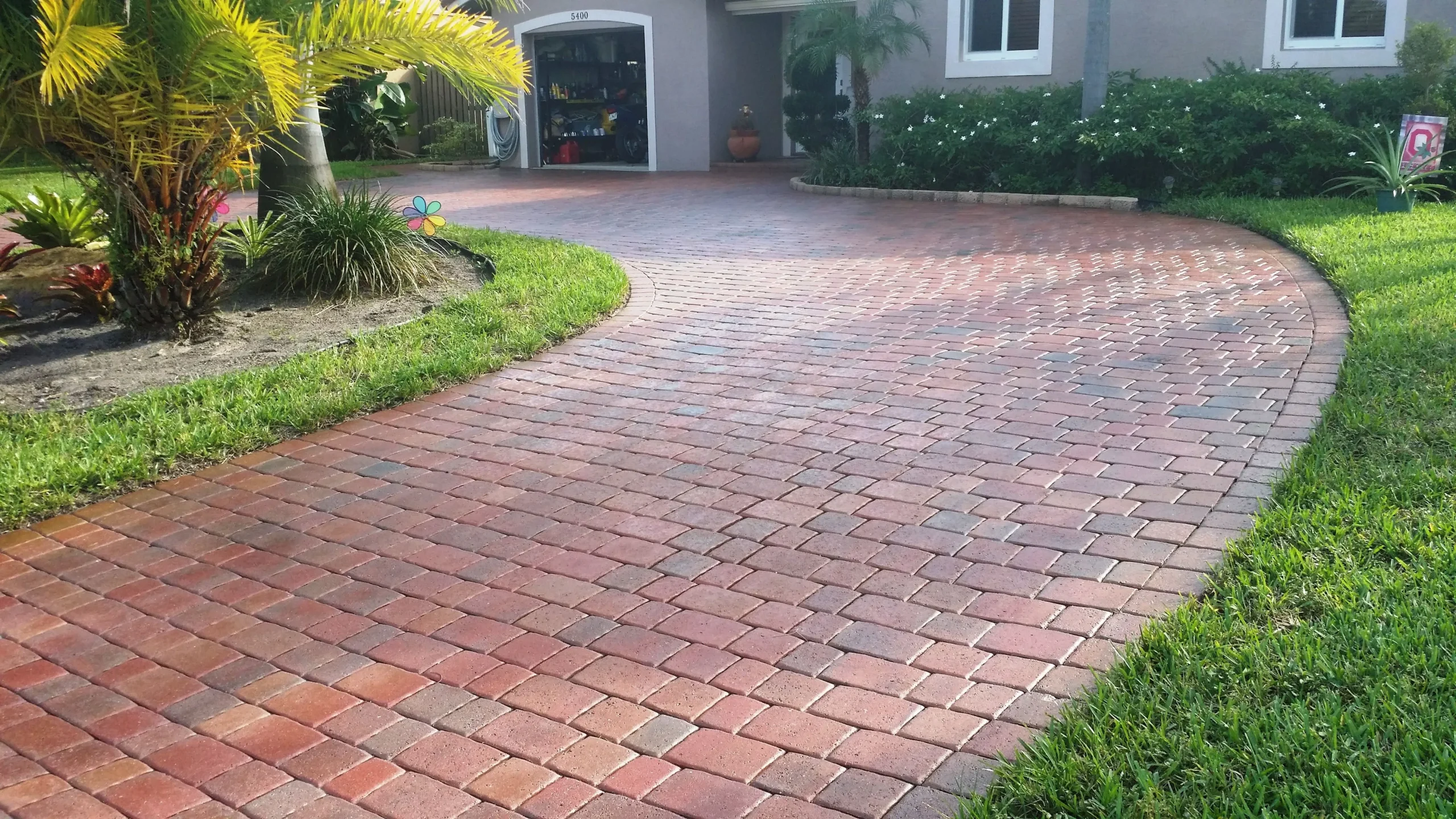
For most Central Florida homes, the best time to seal pavers is the dry season, roughly November through April. Sealer needs clean, completely dry pavers and a stretch of dry weather to cure, and our summer afternoons rarely cooperate. The date on the calendar matters less than the forecast and the condition of the surface, so this guide shows you how to judge both.
Key takeaways
- The dry season, roughly November through April, gives the most reliable sealing windows in Central Florida.
- The National Weather Service puts the median start of the wet season in Orlando at May 27 and the dry season at October 15.
- Pavers and joint sand must be fully dry, and the sealer label sets how long it needs to stay rain-free while it cures.
- Sealing over dirty or damp pavers can trap problems under the finish, so cleaning and drying come first.
- A simple water test tells you when an existing seal is wearing out.

Why timing matters when sealing pavers
- Moisture. Pavers and the sand between them absorb water. Sealing over moisture can trap it and cause a cloudy or whitish look.
- Rain while the sealer cures. A shower on fresh sealer can spot it or wash part of it away. Most products specify a minimum rain-free period, and it varies from one product to the next, so read the label.
- Heat. On a very hot surface, some sealers can dry too quickly, which can leave an uneven finish.
- Dew and humidity. Shaded areas and early mornings can keep pavers damp even when the sky is clear.
When to seal pavers in Central Florida: a month-by-month calendar
These are typical patterns, not guarantees. Individual years vary, and a stubborn rainy stretch in November or an early dry spell in October can change the picture. The wet and dry season dates come from the National Weather Service in Melbourne, which lists May 27 as the median start of the wet season in Orlando and October 15 as the median start of the dry season.
| Months | What to expect | Sealing outlook |
|---|---|---|
| November to February | The driest stretch of the year, lower humidity, cooler mornings | Best window. Watch for the occasional cold front and for morning dew in shaded areas. |
| March to April | Warming up, still within the dry season, longer days | Best window. Dry spells are common, but check the forecast as the wet season approaches. |
| May | Transition into the wet season, with the median start around May 27 | Possible with a reliable forecast. Early storms can arrive without much warning. |
| June to September | Wet season, with frequent afternoon thunderstorms, high humidity, and the chance of tropical systems | Hardest months. Only worth attempting with a dependable multi-day dry window. |
| October | Dry season begins around October 15, though tropical weather can linger because hurricane season runs through November 30 | Good once the pattern settles into dry weather. |
Check these conditions before sealing, no matter the month
- The pavers and the joints are completely dry. After rain this commonly takes a day or more, and longer in shade or where sprinklers reach.
- The forecast stays clear for the full cure period listed on the sealer label.
- The sprinklers are off. In Florida this is easy to forget. A sprinkler zone that reaches fresh sealer can spot the finish and leave mineral stains, so turn off or reschedule any zone that touches the area.
- The surface is not scorching. Avoid applying in blazing midday sun on hot pavers.
- The joint sand is stable. Joints that are low, loose, or washing out should be refilled before sealing.
- The surface is clean. Algae, mildew, oil, rust, and mineral deposits should all be dealt with first.

Prep that decides how the seal turns out
Sealer does not hide problems. It locks in whatever is on the surface, including stains and growth. A sound sealing job follows a clear order:
- Clean the pavers. Remove dirt, algae, and mildew so the sealer bonds to the paver itself.
- Treat stains. Rust from irrigation water, oil, and mineral deposits need their own treatment. Our guide to orange rust stains on Florida driveways explains what works.
- Rinse and let everything dry. This is the step that is easiest to rush and costs the most when it is.
- Refill the joints. Fresh joint sand keeps the pavers locked together and shed water properly.
- Seal. Apply the product evenly, following the label for coverage and conditions.
- Let it cure. Keep foot traffic, vehicles, sprinklers, and rain off the surface for the time the label requires.
If you are still deciding whether your pavers need cleaning, sealing, or both, our post on paver sealing and paver cleaning breaks down the difference.
Should you seal new pavers right away?
Usually not. Newly installed pavers can release efflorescence, a white, powdery mineral deposit that works its way to the surface as the pavers age. Sealing too early can trap it under the finish. Installers and manufacturers often recommend waiting a period of weeks to months, and the right interval depends on the product, so follow your paver manufacturer’s guidance.
How do you know it is time to reseal?
Try the water test. Sprinkle a little water on a clean section. If it beads up, the sealer is still doing its job. If it darkens the paver and soaks in, the protection is wearing thin. Other signs include faded or dull color, stains that soak in easily, algae returning quickly, and joint sand that keeps washing out.
How often this happens depends on the sealer, the amount of sun, foot and vehicle traffic, and how much sprinkler water reaches the surface. Many homeowners find they reseal every few years, but a driveway in full sun with heavy traffic wears differently than a shaded walkway.
Choosing a finish
Film-forming sealers sit on the surface and often deepen color for a wet look. Penetrating sealers soak into the paver and leave a more natural appearance. Either type can include slip resistance, which is worth asking about for pool decks and walkways that stay damp.
What happens if it rains right after sealing?
It depends on how much rain fell and how far along the sealer was in its cure. Light moisture on a nearly cured surface may cause no visible problem, while a heavy shower on fresh sealer can leave spots, streaks, or a milky look. Do not scrub or rinse the area in a panic, because that can make the finish worse. Wait until the surface dries, look at the result in daylight, and talk to your contractor or the sealer manufacturer about options. In serious cases the fix can mean stripping the sealer and applying it again, which is a good reason to choose your sealing day carefully in the first place.
Does the type of paver change the timing?
The calendar stays the same, but the details can shift. Concrete pavers, clay brick pavers, and natural stone absorb water at different rates, and some stones are sensitive to certain cleaners and sealers. A denser paver may dry faster after rain, while a porous one can hold moisture longer. If you have travertine, a tumbled stone, or an unusual finish, ask for a product recommendation that suits your specific material rather than assuming one sealer fits everything.
How long does a paver sealing project take?
Longer than most homeowners expect, because the pavers need time to dry between steps. A typical project involves cleaning and treating the surface, letting it dry fully, refilling the joint sand, applying the sealer, and then keeping traffic and water off while it cures. Depending on the weather and the size of the area, that can stretch across more than one day. Planning for the extra time is much better than rushing the drying step to hit a deadline.
Questions to ask a paver sealing contractor
- What sealer will you use, and is it film-forming or penetrating?
- How do you decide whether the weather is suitable, and what happens if the forecast changes?
- How will you protect the area from my sprinklers while the sealer cures?
- How long should I stay off the surface, and when can cars return?
- How will you deal with rust, algae, oil, or efflorescence before sealing?
- When should I expect to reseal, and how will I know?
A contractor who answers these questions clearly and without pressure is usually a good sign.
Frequently asked questions
Can I seal pavers in the summer in Florida?
It is possible, but it is the hardest time of year. Afternoon storms, humidity, and damp joints make it risky unless there is a reliable multi-day dry window.
How long after rain can pavers be sealed?
The pavers and the joint sand need to be completely dry. A day or more is common, and shaded areas and spots near sprinklers can take longer.
How long before I can walk or park on sealed pavers?
It depends on the product. Check the label for the cure times, and keep rain and sprinklers off the surface for the full period.
Is sealing pavers worth it?
For most homeowners, yes. A sealer helps protect color, helps the surface resist stains and algae, and can help keep joint sand in place. It does not replace cleaning, and it needs to be renewed as it wears.
Do you seal pavers in my area?
Yes. Paver cleaning and sealing is one of our core services across Central Florida, including Windermere, Celebration, Kissimmee, and Winter Garden.
Plan your paver sealing with a local crew
Top Dawg Power Washing is locally owned and operated in Windermere, Florida, and paver sealing is one of the things we do best. See our paver sealing services, call 407-697-8603, or request a free estimate.