
A pool cage is one of the most useful outdoor structures for homeowners. It keeps insects out, reduces debris in the pool, and provides a cleaner, more comfortable swimming environment. But over time, dirt, algae, pollen, mold, and weather buildup can make the cage look dull and even damage its materials if not cleaned properly.
Cleaning your pool cage regularly keeps it strong, safe, and visually appealing. The good news is that with the right approach, it’s not a difficult job.
Why Cleaning Your Pool Cage Matters
Pool cages are usually made of aluminum frames and mesh screens. While durable, both materials can collect grime quickly due to constant exposure to moisture, sun, and outdoor debris.
If you don’t clean it regularly, you may notice:
- Green or black mold spots on frames or screens
- Dust and pollen buildup blocking airflow
- Stains from hard water or rain runoff
- Rust-like oxidation on aluminum surfaces
- Weak or sagging screen sections over time
Routine cleaning helps extend the life of the structure and keeps your pool area looking fresh and inviting.
Tools and Supplies You’ll Need
Before you start, gather the right cleaning materials. Using the correct tools prevents damage to the mesh and frame.
You’ll typically need:
- Garden hose with spray nozzle
- Soft-bristle brush or sponge
- Bucket of warm water
- Mild dish soap or gentle detergent
- White vinegar (for mold and mildew)
- Extension pole (optional for high areas)
- Microfiber cloths
Avoid harsh chemicals like bleach in high concentration or abrasive scrubbers, as they can damage the screen material or discolor aluminum.
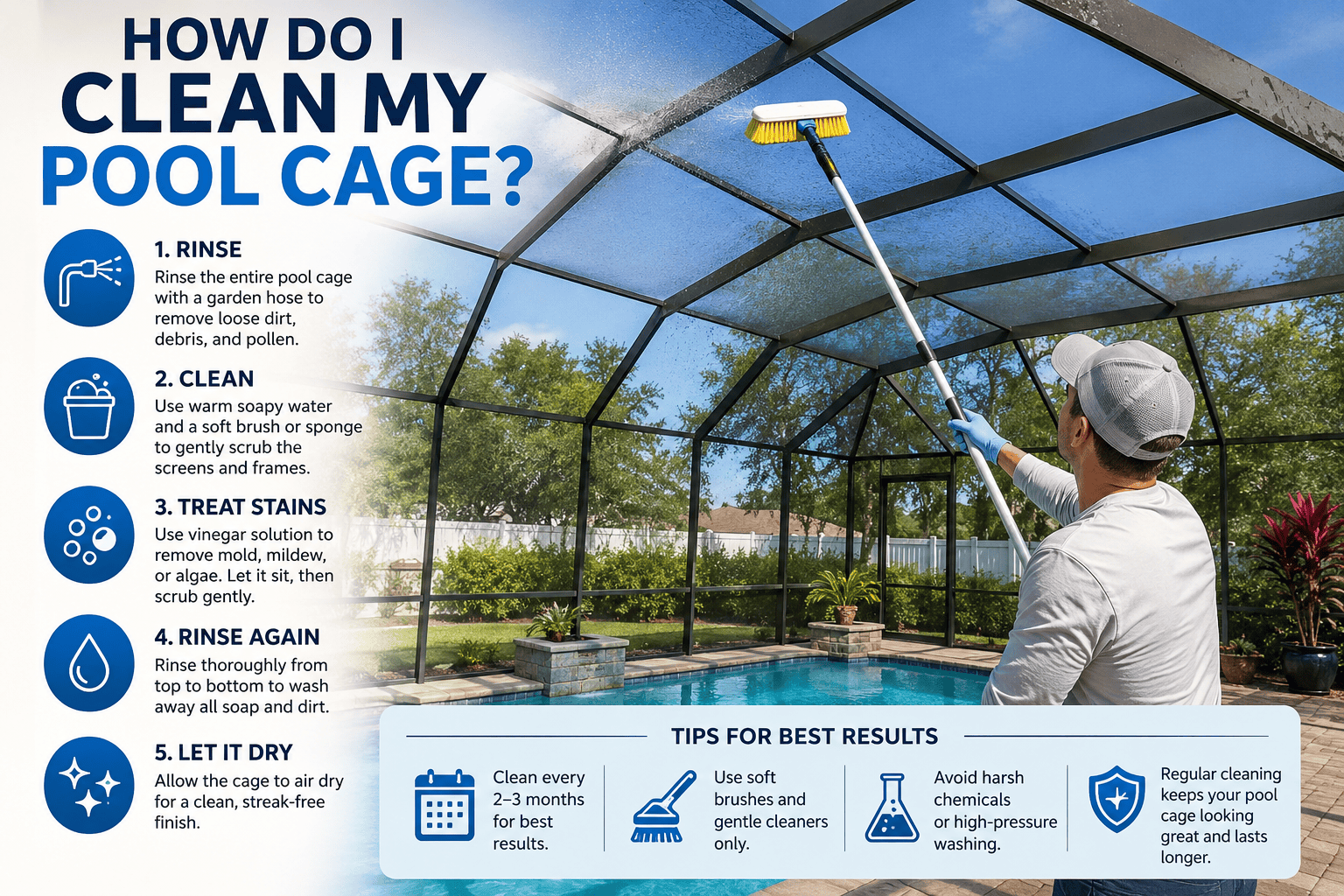
Step 1: Remove Loose Dirt and Debris
Start by rinsing the entire pool cage with a garden hose. This helps remove loose dust, leaves, pollen, and cobwebs before you begin scrubbing.
Work from top to bottom so dirt flows downward instead of spreading to already-cleaned areas. Pay special attention to corners, roof sections, and frame joints where debris tends to accumulate.
If you have a leaf blower, you can also use it to remove dry debris before rinsing.
Step 2: Prepare a Gentle Cleaning Solution
Mix warm water with a small amount of mild dish soap in a bucket. This solution is usually strong enough to remove dirt without harming the screen or aluminum.
For mold or mildew spots, you can add a small amount of white vinegar to the solution. Vinegar helps break down organic growth naturally without harsh chemicals.
Step 3: Clean the Screens Carefully
The mesh screens are delicate, so avoid heavy pressure or hard scrubbing.
Dip a soft brush or sponge into your cleaning solution and gently scrub the screens in circular motions. Focus on:
- Dark or stained areas
- Bottom sections where dirt collects
- Corners and edges of panels
Do not push too hard, as this can stretch or tear the mesh.
After scrubbing each section, rinse it immediately with clean water to prevent soap residue from drying on the screen.
Step 4: Clean the Aluminum Frame
The aluminum frame is more durable than the screens but still needs gentle care.
Use your soapy water and a soft cloth or sponge to wipe down all frame surfaces. Pay attention to:
- Joints and corners
- Horizontal beams where water sits
- Areas near screws and fasteners
If you notice oxidation (a chalky white residue), you can gently scrub it using a vinegar-water solution or a non-abrasive cleaner.
Rinse thoroughly once finished.
Step 5: Handle Mold and Mildew Spots
In humid climates, mold and mildew are common on pool cages, especially in shaded areas.
To treat them:
- Spray a vinegar-water mixture directly on affected areas
- Let it sit for 10–15 minutes
- Gently scrub with a soft brush
- Rinse thoroughly with clean water
If buildup is heavy, you may need to repeat the process. Avoid bleach unless absolutely necessary and heavily diluted, as it may weaken screens over time.
Step 6: Rinse Everything Thoroughly
Once scrubbing is complete, rinse the entire structure again from top to bottom. This ensures all soap, dirt, and loosened debris are washed away.
Make sure no cleaning solution is left behind, especially on screens, as residue can attract more dirt over time.
Step 7: Let It Air Dry
Allow the pool cage to air dry naturally. Because it is an outdoor structure, sunlight and airflow will help speed up drying.
Avoid wiping screens aggressively while they are wet, as this can stretch or damage the mesh.
Optional: Pressure Washing (Use Caution)
Some homeowners choose to use a pressure washer for faster cleaning. While effective, it must be done carefully.
If you use a pressure washer:
- Use low pressure only
- Keep a safe distance from screens
- Avoid direct spraying on seams or joints
- Do not focus on one spot for too long
High pressure can easily tear mesh screens or loosen frame seals, so this method is best left for experienced users.
How Often Should You Clean a Pool Cage?
The frequency depends on your environment, but a general guideline is:
- Light rinse: once every 2–3 weeks
- Full cleaning: every 2–3 months
- Deep cleaning (with mold treatment): 1–2 times per year
If you live in an area with heavy pollen, frequent rain, or nearby trees, you may need to clean it more often.
Common Mistakes to Avoid
Many people unintentionally damage their pool cage while cleaning it. Avoid these mistakes:
- Using high-pressure water on screens
- Scrubbing with abrasive brushes or steel wool
- Using strong chemicals like undiluted bleach
- Ignoring the top roof sections
- Letting soap dry on surfaces
Taking a gentle and consistent approach is always safer and more effective.
When to Consider Professional Cleaning
While DIY cleaning works for regular maintenance, there are situations where professional help is better:
- Heavy mold or algae buildup
- Very tall or hard-to-reach cage roofs
- Stained or oxidized aluminum frames
- Torn or weakened screens that need inspection
Professionals have specialized equipment and cleaning solutions that can restore the cage without risking damage.
Final Thoughts
Cleaning your pool cage is not just about appearance—it’s about protecting your investment. Regular maintenance keeps the structure strong, extends the life of the screens, and ensures your pool area stays clean and enjoyable year-round.
With a simple routine of rinsing, gentle scrubbing, and occasional deep cleaning, you can keep your pool cage looking almost new without much effort.